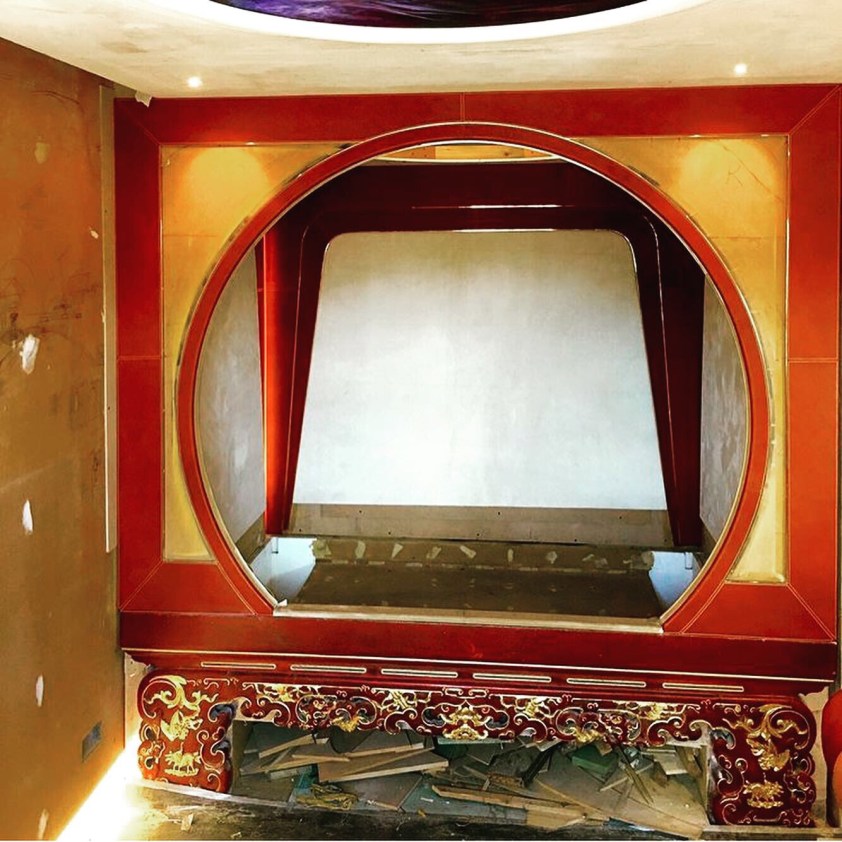
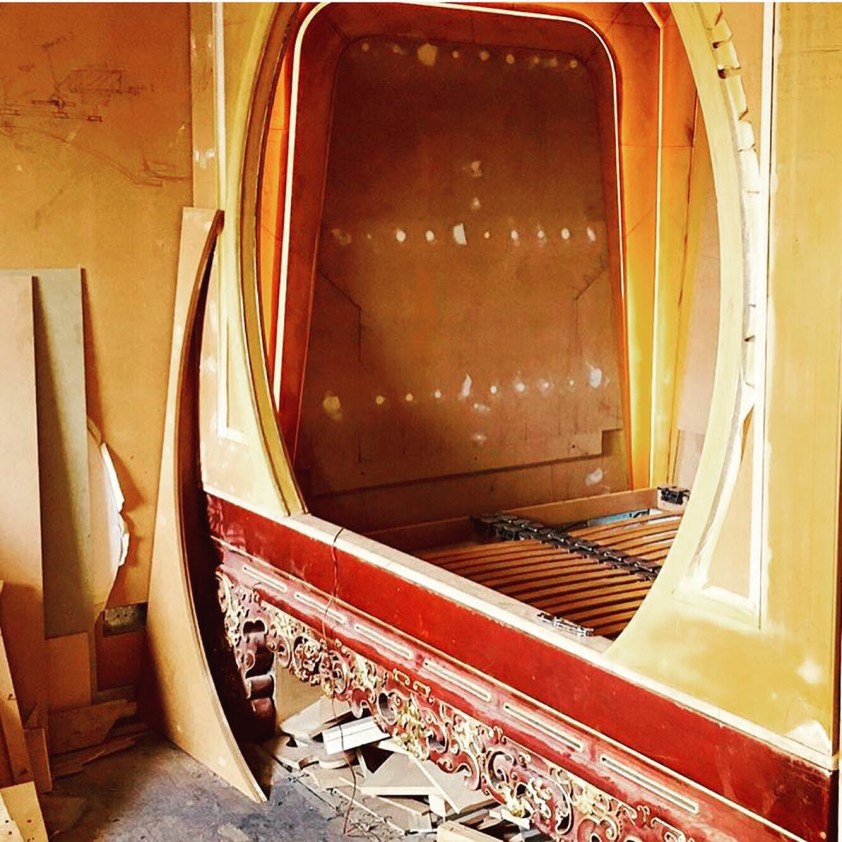
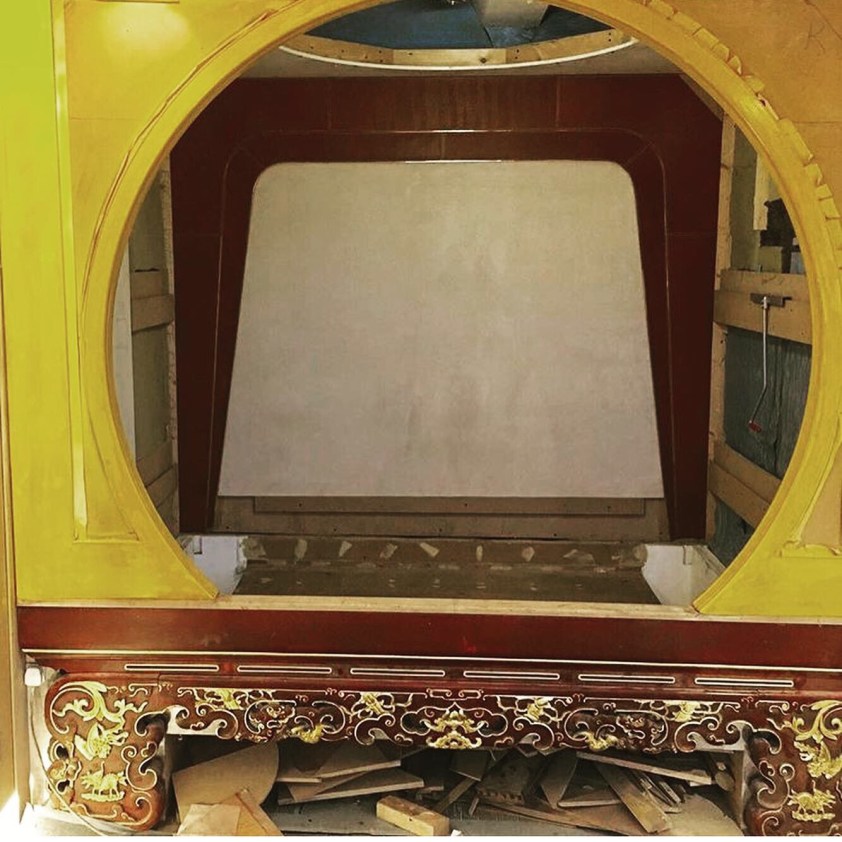
Our opium bed and how it is progressing
#inxanadu #opiumbed #vaishaliprazmari #patrikprazmari #husbandandwifeteam #workingtogether #samueltaylorcoleridge #leather #wood #antique #chinesebed #masterpiece #showpiece #comingsoon
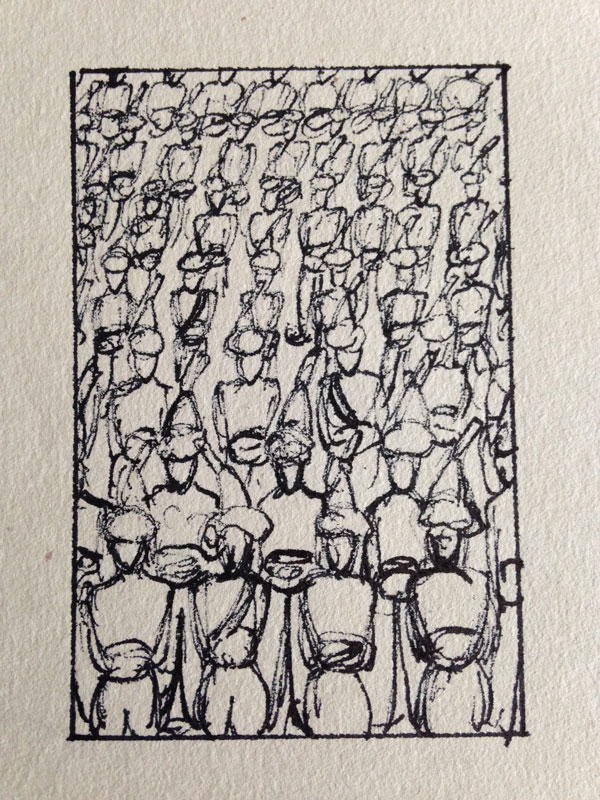
Our opium bed and how it is progressing
#inxanadu #opiumbed #vaishaliprazmari #patrikprazmari #husbandandwifeteam #workingtogether #samueltaylorcoleridge #leather #wood #antique #chinesebed #masterpiece #showpiece #comingsoon
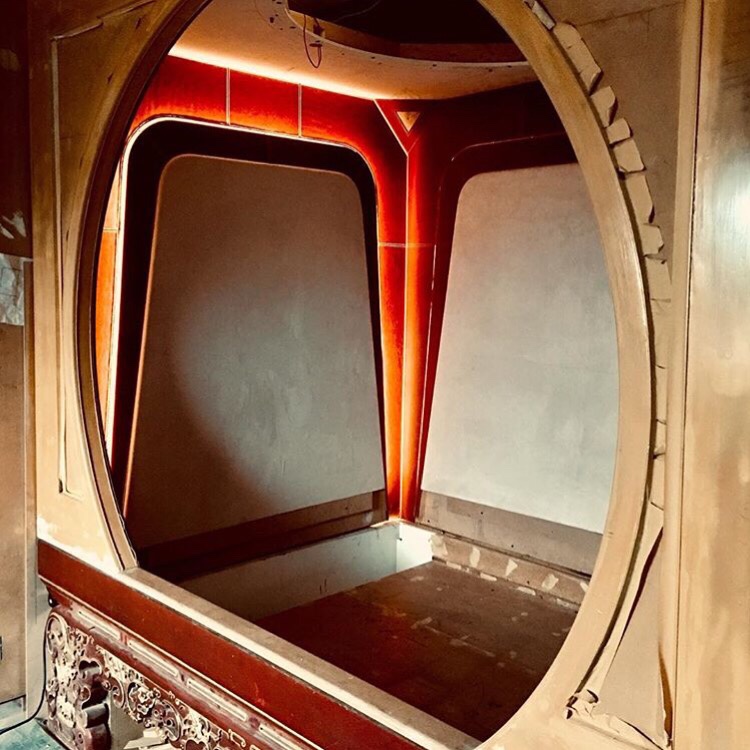
A home for the dome. It’s going in here, in the ceiling of this opium bed. Entirely appropriate for a dome inspired by a poem induced by opium dreams – please note, no opium was consumed during the making of my dome! It’s equally inspired by the revolving rooms of the Sasanian kings – my dome revolves too.
At the bottom you see a glimpse of an antique opium bed part my amazing husband found in a scrapyard. He restored it, re-gilded it and recreated it in wood and leather. Our labour of love ~
#vaishaliprazmari #patrikprazmari #samueltaylorcoleridge #dome #inxanadu #inxanadudidkublakhan #inxanadudidkublakhanastatelypleasuredomedecree #opiumbed #opiumdreams #inspirationalquotes #inspiredbypoetry #husbandandwife #husbandandwifeteam #leather #wood #amazingscrapyardfinds
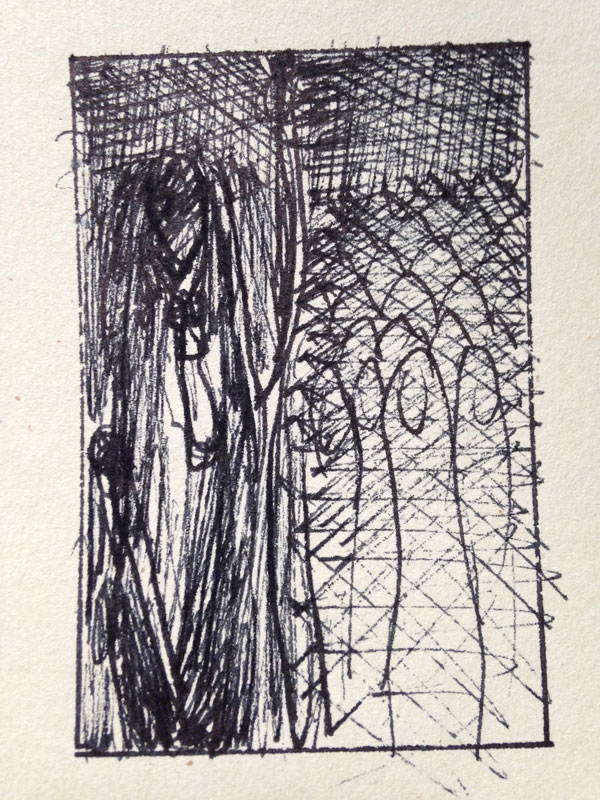
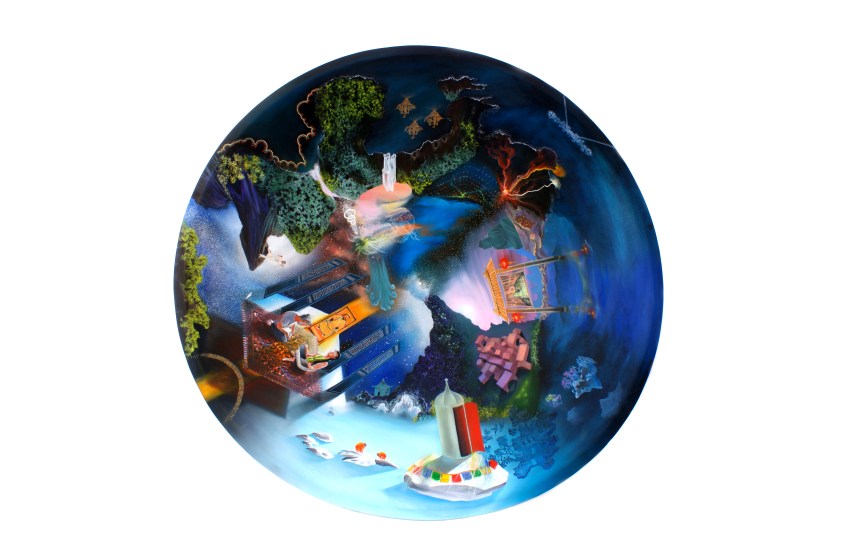
Dome, done.
Details:
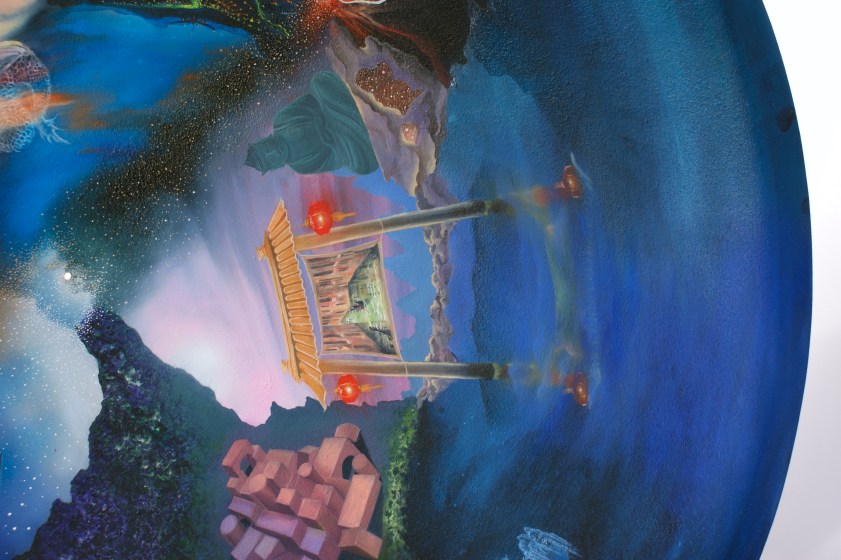
A Chinese cinema rises from the sea next to a coastal city. The screen, flanked by two lanterns, shows Venice, Marco Polo’s homeland far away. Buddha observes quietly. Stars burst into the sky.
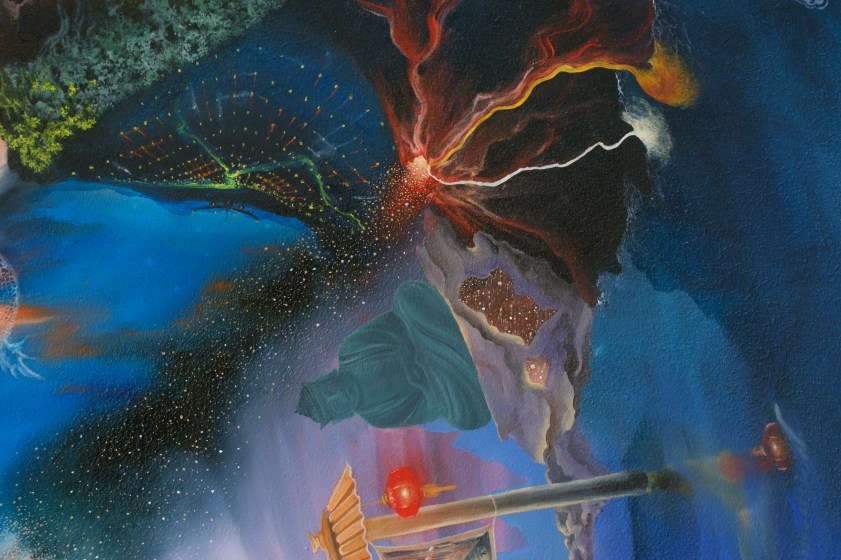
We see that the volcano also emanates stars. As well as rivers of milk and honey which flow into the vast ocean. In the distance, a plane lands at an aeroport lit up at night against a backdrop of a cyan blue perfect twilight sky.
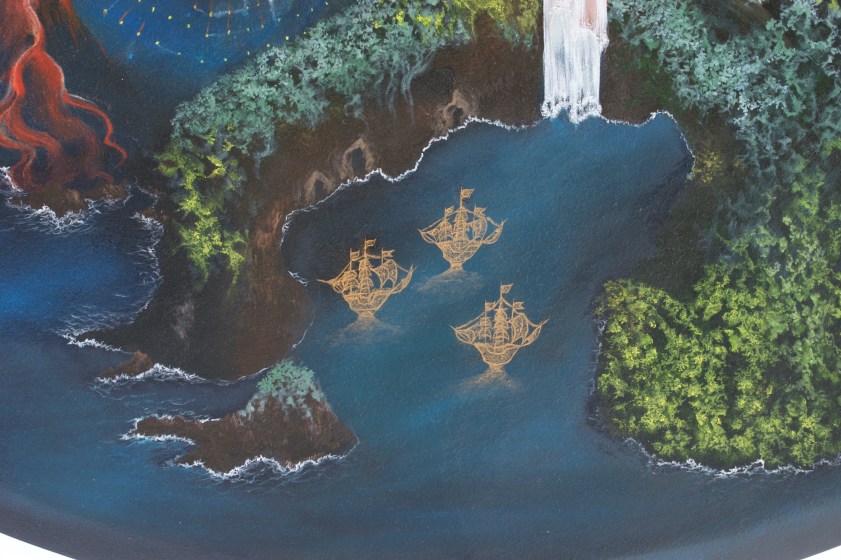
The waterfall gives way to a calm bay, in which 3 golden ships are a-sailing.

The smaller bay is cusped by Piri Re’is-style Ottoman map outlines.
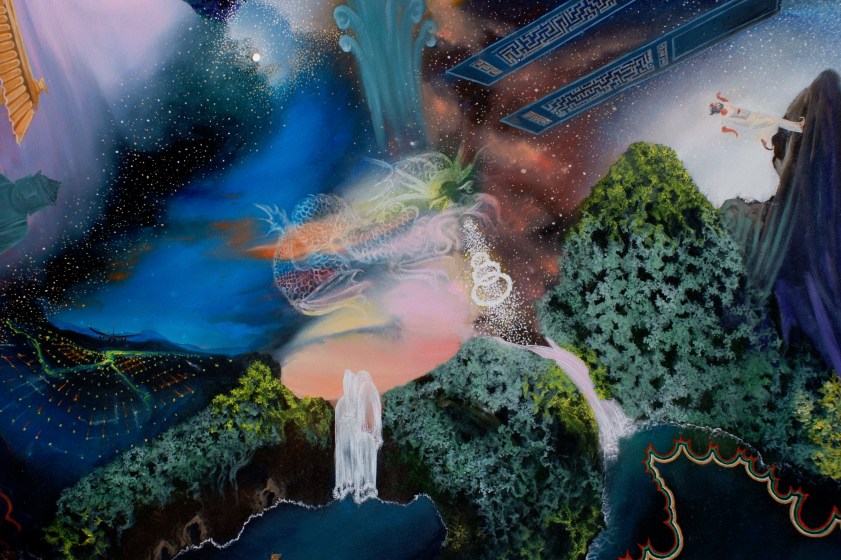
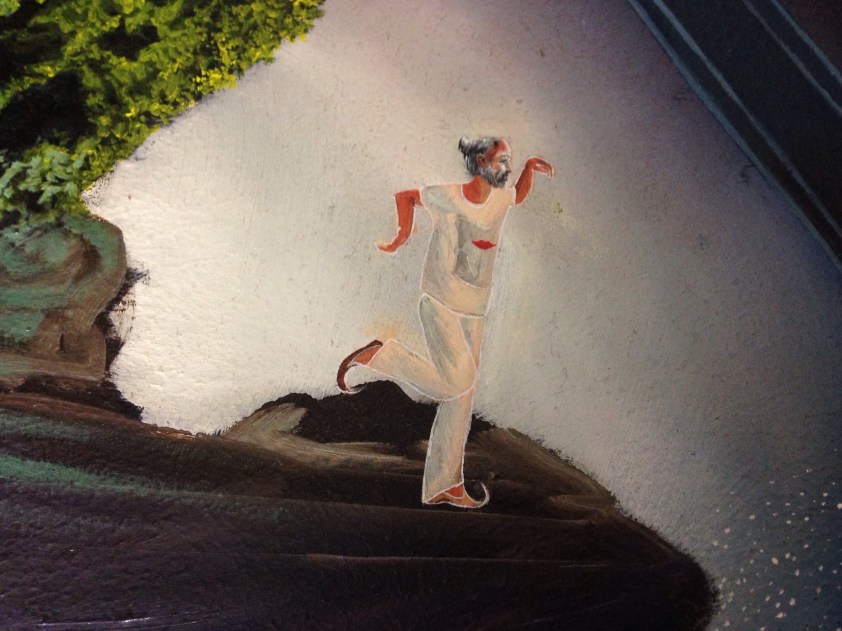
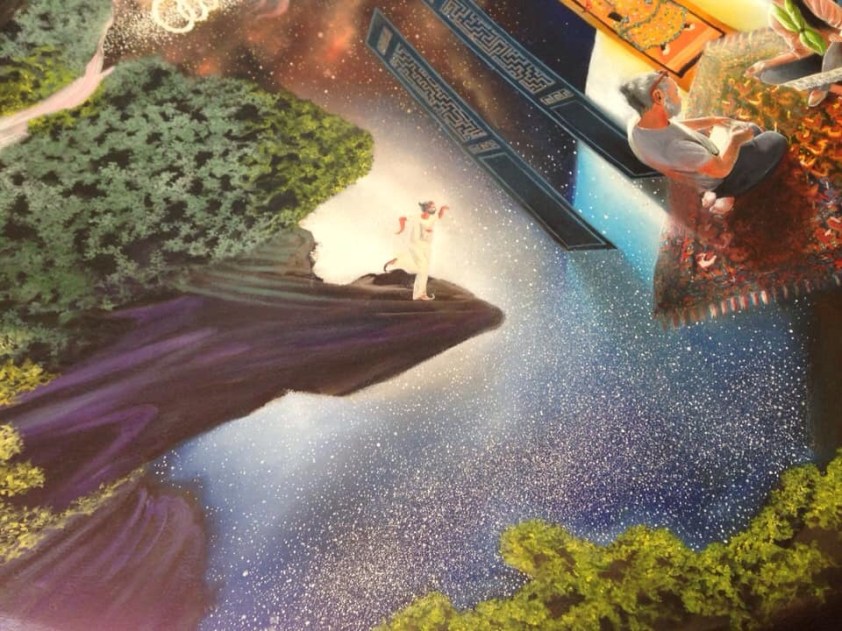
Above the pink sunset sky a cloud dragon lies in wait. It blows 3 lazy circles, thrice, while nudging the edge of the universe. We catch a glimpse of a balancing man.

He balances on the ledge perched on the edge of a cliff which drops away to an abyss of a million stars below. There seems to be a paper aeroplane which has just left his hand, a trajectory which leads us to the edge of a carpet.
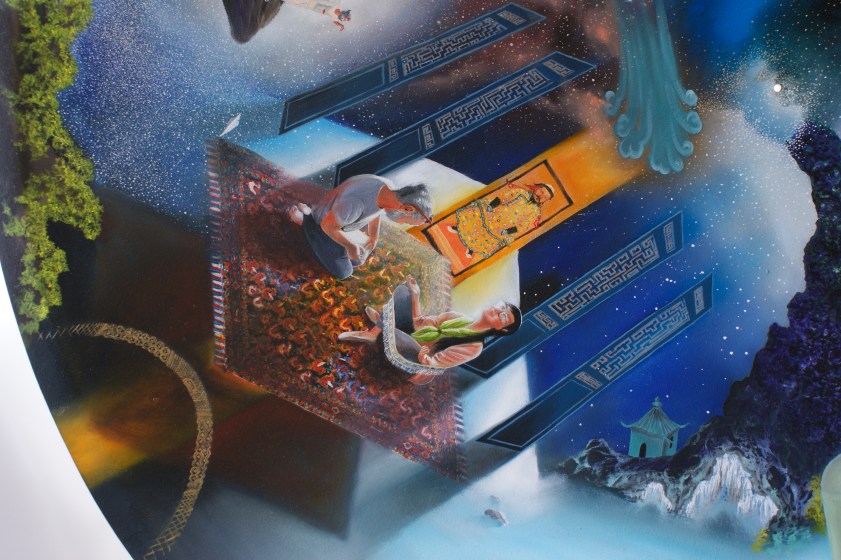
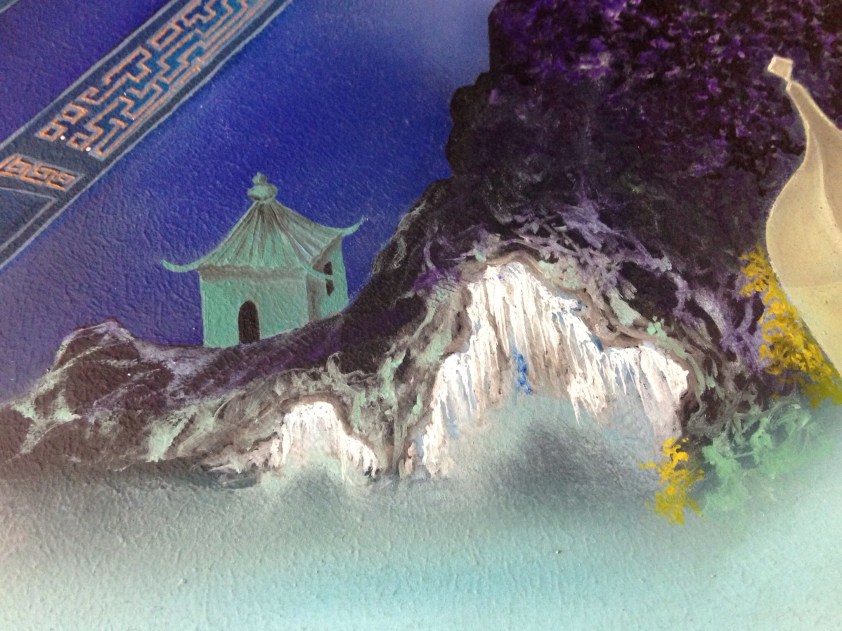
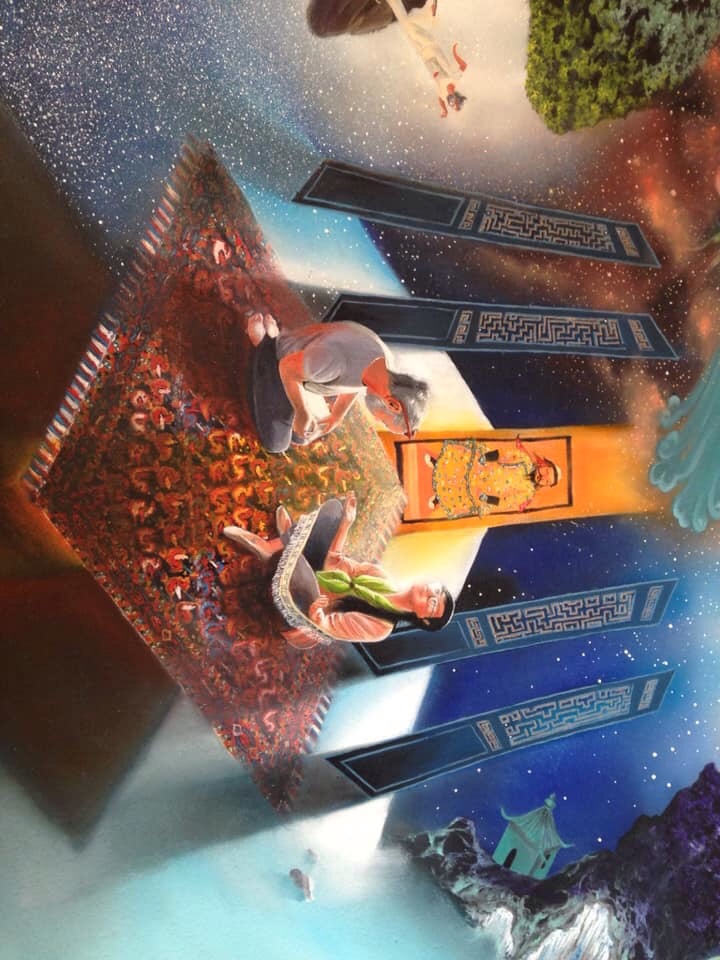
Seated on the carpet are 2 figures, connected by the rug underneath them but seemingly inhabiting two different worlds; each focuses on the thing at hand. For the man, it is the image in his mind which he seeks to fix on the paper. For the woman, it is the image from above which she seeks to capture in her mind’s eye. Perfectly content in each other’s presence, both are absolutely absorbed in their own universes while being grounded by the rug which happens to be floating, stationary, a little way above the sea. Beneath lurks an arcing Willow Pattern fragment. In the near distance, a little Chinese temple at night watching over caves of ice.

We scan the edges for the second Willow Pattern fragment. Here it is, at sea.
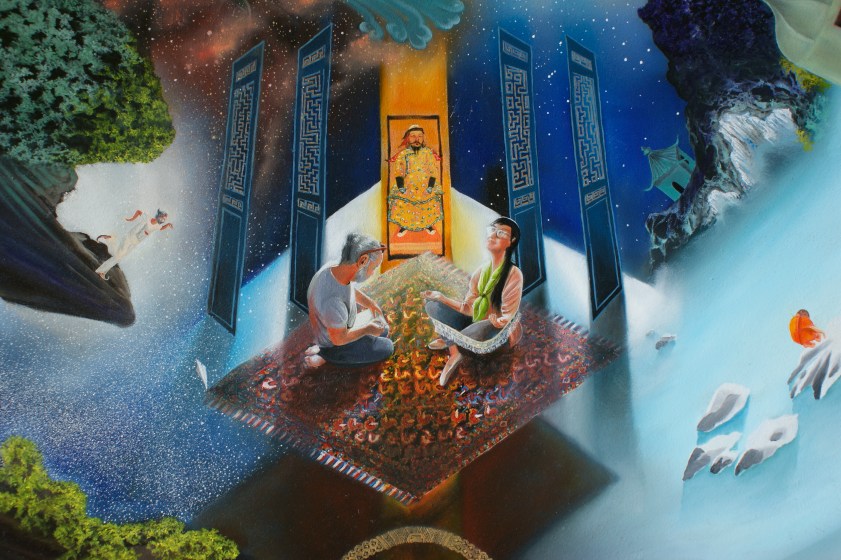
We return to the strange captivated figures. Between them is a yellow pillar with a painting of an Emperor. This is Kubla Khan. Only the Emperor is permitted to wear the royal yellow robes. A stone’s throw away, an abject monk.
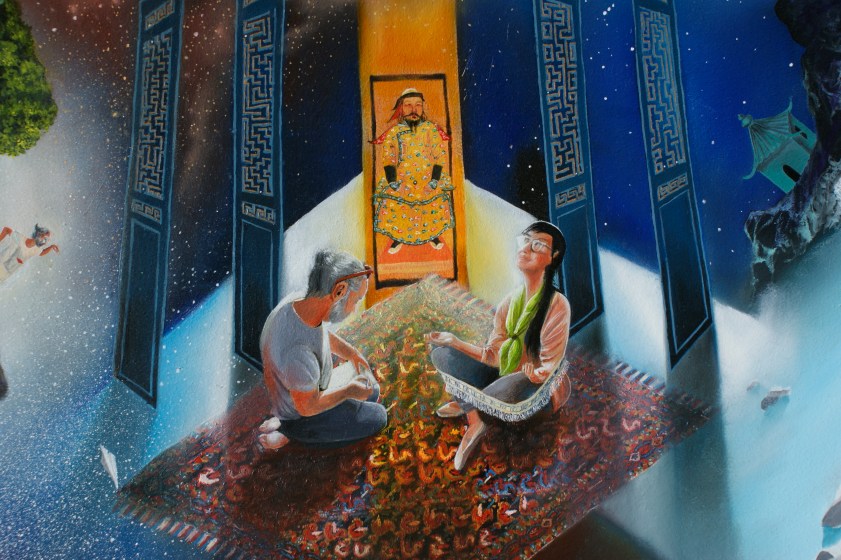
We are drawn by the strange square-like patterns on the screens framing the Emperor. We inspect them closer. They are not patterns. They are mazes. Yes, they are labyrinthine screens – each one has a little star indicating its start and end points and the mazes are incrementally harder to solve, from left to right. That is as it should be.
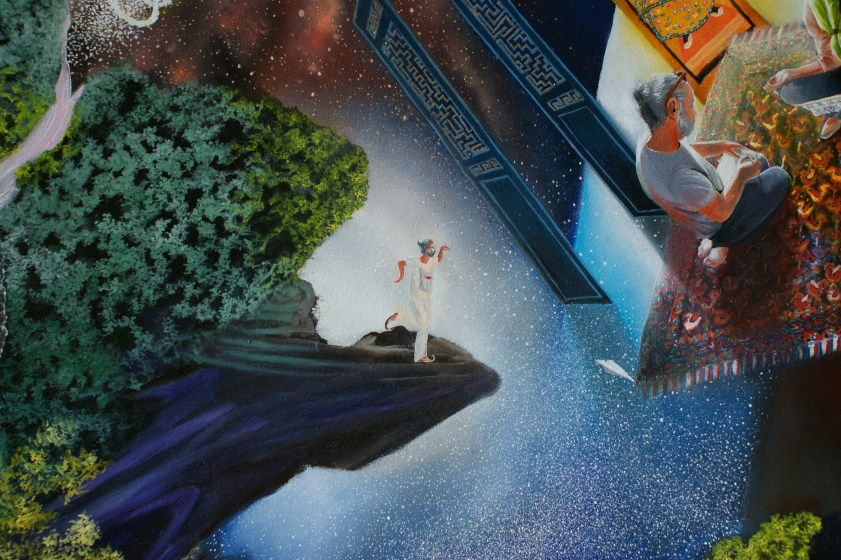
A little tired after peering intently at the intricacy of the mazes, our eyes zoom out and wander back to the vastness of the starry sky.
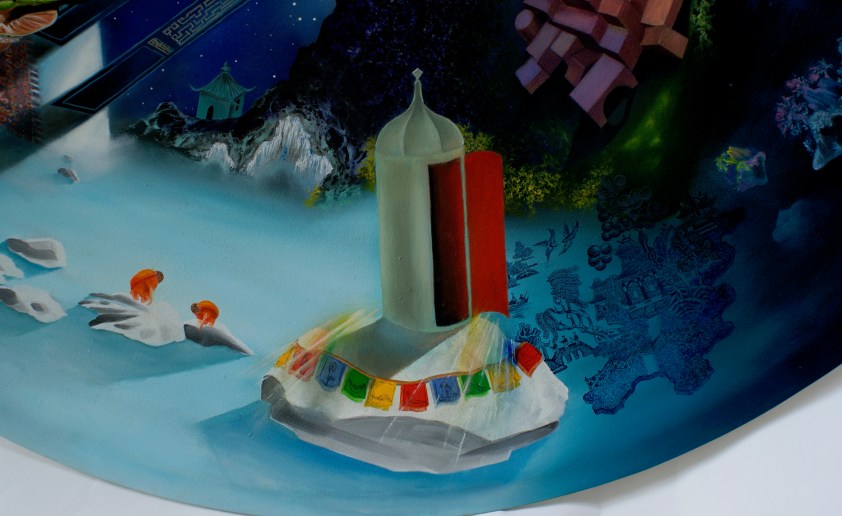
We wonder what holds the abject monks to their invisible task on the rocks in the cold, cold sunlit sea. Whatever absorbs them, they are absolutely enthralled. We see prayer flags surrounding the largest rock. We zoom in. Each painted flag shows a different asana pose illustrating the path to spiritual evolution, from the inanimate to the animate to the supernatural. The Mountain-Tadasana, the Tree-Vriksasana which represents the kingdom of plants, the Locust-Salabhasana, the Fish-Matsyasana, the Cobra-Bhujangasana, the Pigeon-Rajakapotasana, the Dog-Adhomukhasvanasana, the Warrior-Virabhadrasana, the Gods as Vishnu’s Couch-Anantasana.
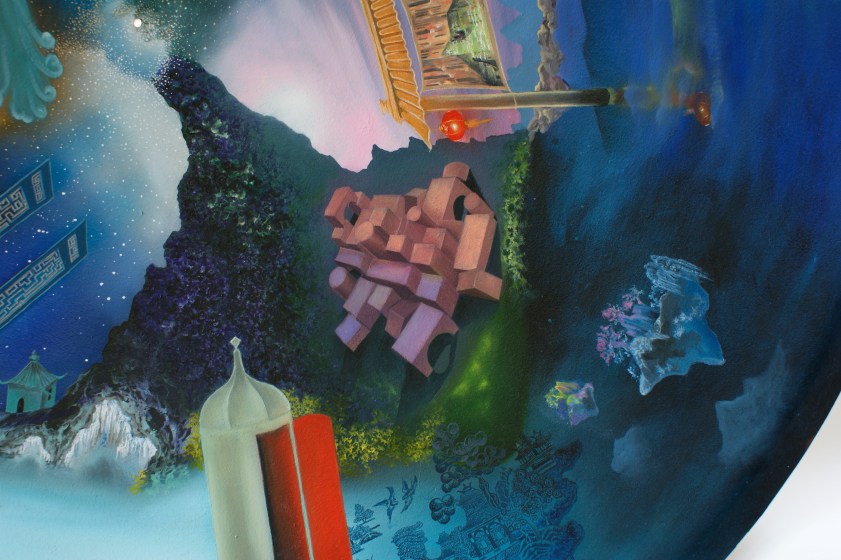
That was a lot of asanas. We take a break and drift towards 2 floating islands reflected in the sea.

We realise that we have come full circle. Everything is connected.
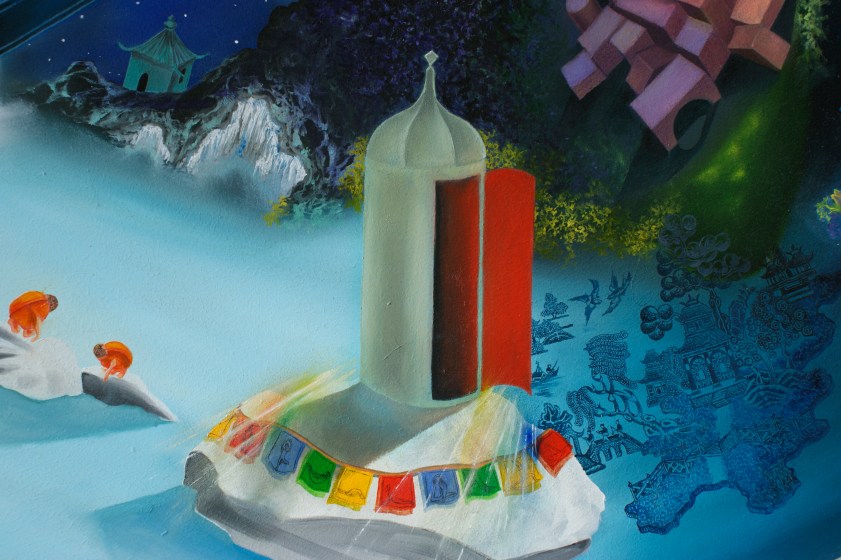
We wander back to the empty jade green pleasure dome. It is open. It is bright red inside. But that leaves us none the wiser as to its contents. Perhaps it is a Dr. Who-like portal. Perhaps it is a Narnia wardrobe, a door to different realms. Perhaps it is empty. It remains a mystery.

We stop to peer at the full Willow Pattern in all its intricacy, reminding ourselves that like everything else here, it was a figment of somebody’s imagination; it once existed in someone’s head and flourished in their mind’s eye; an armchair traveller who lived in the West but dreamed of China, just like Coleridge’s opium-induced vision of Xanadu, just like the boy Marco Polo’s dream of the East centuries before.
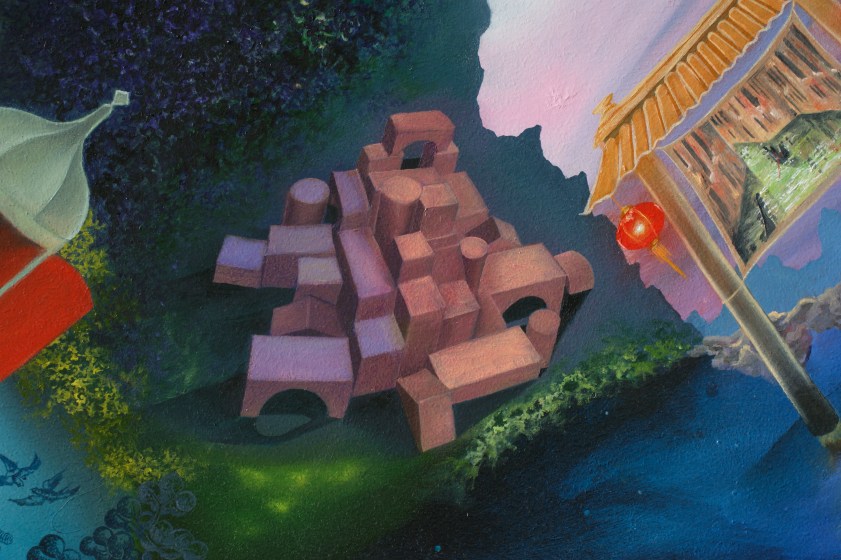
Breathless from travelling through space and through time, we return, as always, back to civilisation, back to reality, back to everyday working dreams, back to where we came from. Back to the drawing board and back to the basics. Back to the wooden blocks to begin once more to build. Back to the city, again ~


Final finishing touches ~
Abject monks & caves of ice
Prayer flags & curly edges
Magic carpets & circles thrice
& balancing on ledges ~




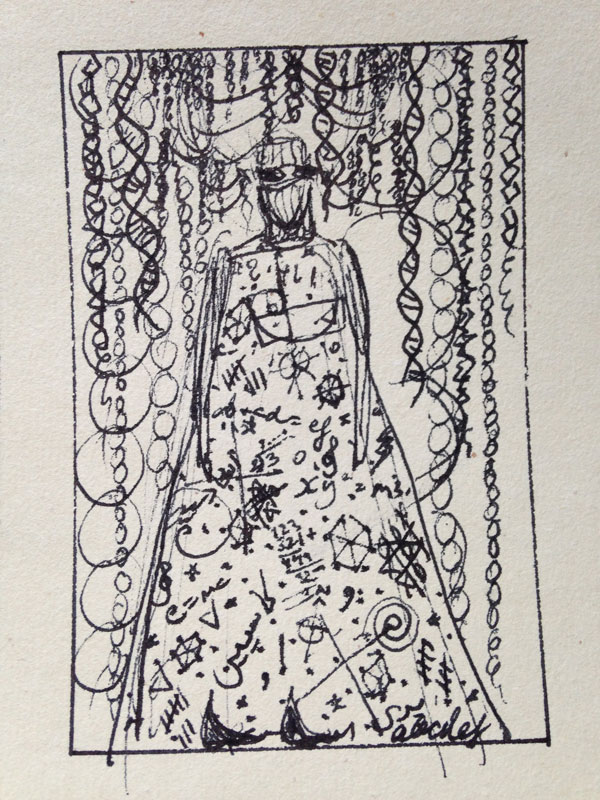
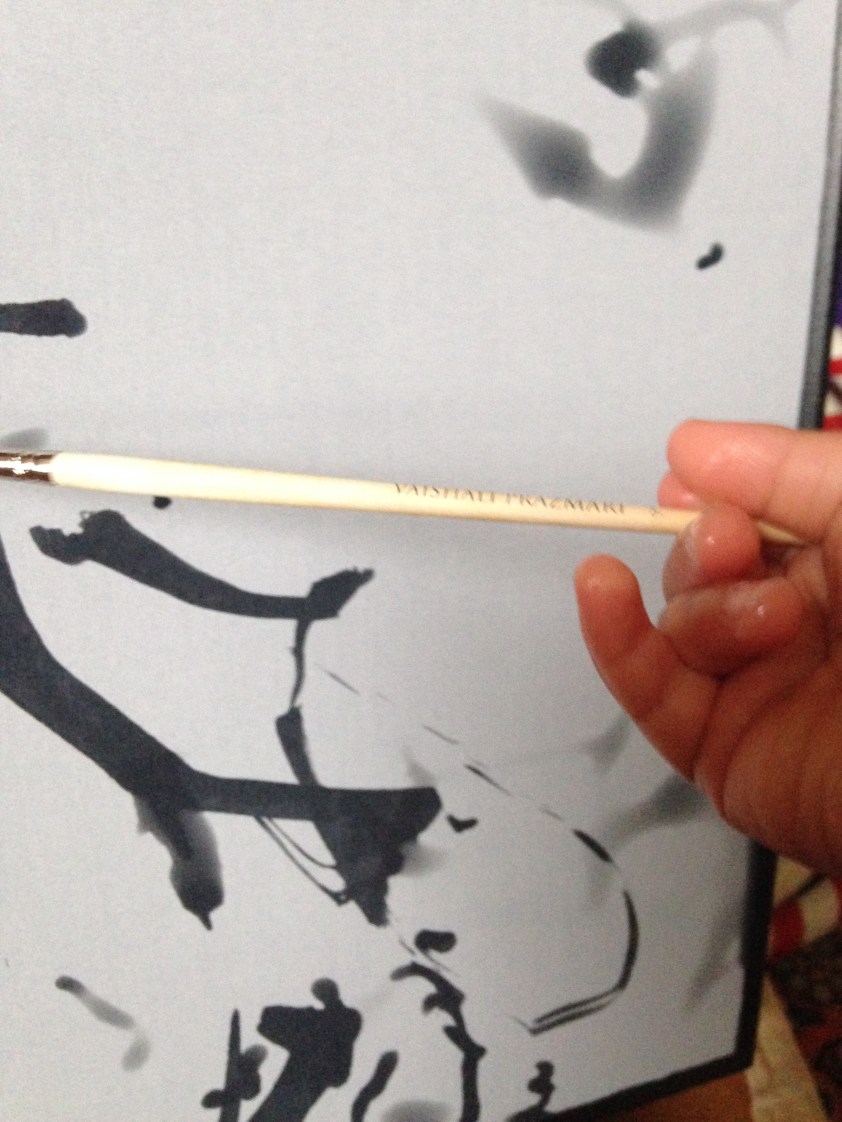
An old Chinese legend tells of a poor little boy who loves to paint. He can’t afford a paintbrush, so he draws instead. Then one day, he gets given a paintbrush by a magical old man – and whatever the boy paints turns out to be real. He helps his fellow poor people by painting things they need and eventually it reaches the Emperor’s ears. However, the Emperor is greedy and wants only gold, and forces the little boy to paint things for him against his will. When the Emperor asks for a ship on the sea and some waves to go sailing, the clever little boy keeps on painting waves until they drown the ship, and then he simply walks away with his magic paintbrush tucked under his arm.
I read the story of the Magic Paintbrush to my son while he enjoyed an afternoon of free painting with my Water Brush. It’s such a pleasure to watch children paint – it’s a reminder of the truism that ‘painting is one of the last freedoms’ and nobody is more free than a child left to their own devices during cherished, unbroken and unstructured play time. It’s one of the rare privileges of childhood and indeed it’s what made me into the artist I am today.
I believe children should have a wide variety of art materials – both children’s art materials and real, beautiful tools wherever possible. The mix allows them to go wild with materials while also learning respect for proper tools. Also, my raw wood handles encourage the tripod grip.
Let your kids play freely and allow them the space to be bored. Painting with kids encourages you to go with the flow too. There is no need to be prescriptive and there are no expectations – if they wants to dance with the brush on the page, let them. If they are frustrated that they can’t draw a dinosaur and want you to do it, by all means step in. Many books and early years theories will tell you the opposite extremes of either letting the child do whatever they like and you keep your hands off (which can sometimes lead to frustration as they cannot fully express themselves without honed fine motor skills) or the adult taking over the act completely (where creativity is thwarted).
As an artist I say it doesn’t matter. Just keep the flow going and what will be, will be. There will be other artworks, other times. Think long-term. This balance ensures that painting – or whatever activity you’re doing, for that matter, with a child – stays playful. Sometimes it’s a piece made all by themselves, sometimes they will want the adult to demonstrate, sometimes it’s a shared piece, sometimes they’ll want their hands to be guided, sometimes you keep the work, sometimes you don’t. Sometimes they won’t want to paint at all. Sometimes the paint disappears all by itself, as if painted by the Magic Paintbrush…


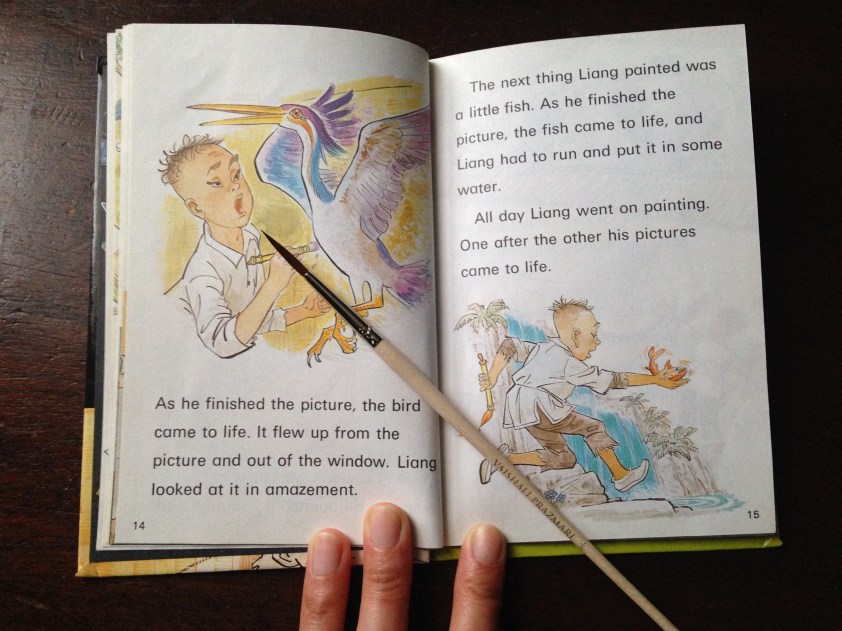
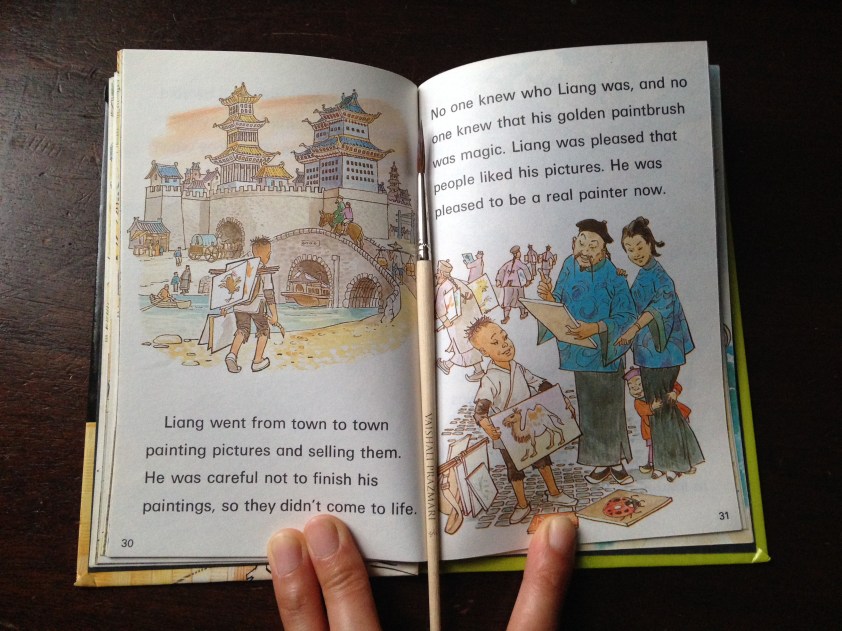
This was from my Brushes blog at https://www.theperfectbrush.co.uk/single-post/2019/05/27/THE-MAGIC-PAINTBRUSH – you can also purchase the Water Brush there too. I loved Ladybird books as a kid and also this story – such a pleasure to share it with my child now as well ~

Cf


Allow for perspective distortion a bit
Painting the tassles was fun!


This week’s Dome Poem:
What’s in the dome? A Dr. Who-style transporter? An empty wardrobe? A changing room? Nothing?
I saw three ships
We’re done! Looking up at Kublai
Yours truly
Strange man
My gorgeous little golden ship reference – once worn on a hat (those days when I used to dress up for events!)
Part of the circular surroundings of the Willow Pattern/Blue Willow
I add Greek yoghurt to everything. This is where all the pots go
Sunlight on the sunlit part of the dome
Green details ~


We’re almost done.
I love the cold, pale blue of this sea in the sunlight and my ‘abject monks’ contemplating their stone.
A shared fascination with Kublai Khan and Genghis Khan is how we met.
Chinese emperors traditionally wore yellow, as yellow could only be worn by the emperor.
Kublai Khan (interesting beard, like a double goatee).
Painting a magic floating carpet.
The original rug.
Detail from the cover, I like the diagonal energy of this rug.
Becoming more and more complete ~


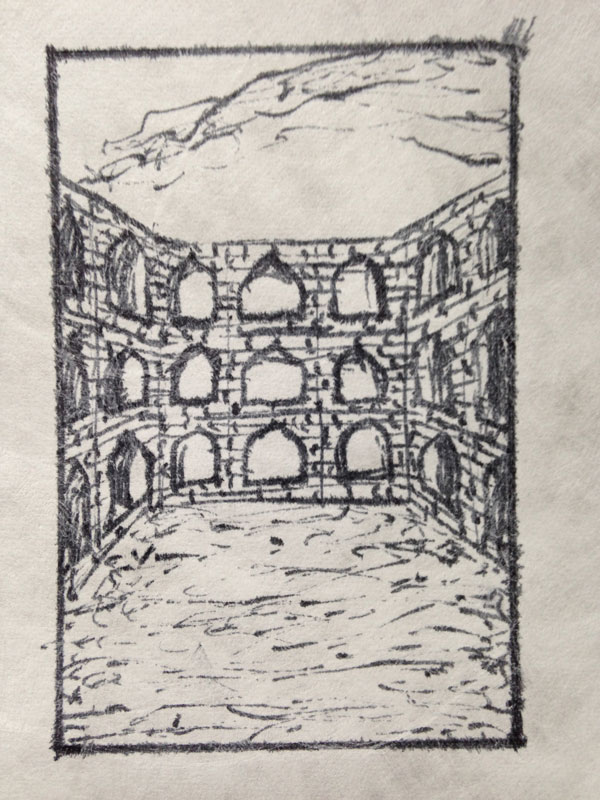
The City of Blocks.
Block City – I needed to see the 3D form a city would take for perspective reasons so I used my child’s blocks!
The Willow Pattern takes shape.
The Willow Pattern – Chinese but not Chinese. Famously and erroneously thought of as Chinese in origin, it was actually dreamt up by 18th century English ceramic artists to look quintessentially Chinese, so it’s a form of Chinoiserie. Known in the US as Blue Willow, they also conjured up a story in order to make it more romantic: two lovers (the daughter of a rich man and a poor young accountant) are prevented from being together by her father who wants her to marry a Duke on the day the blossom fell from the willow tree. The Duke gives the lady a gift of jewels and one evening she and the poor young man escape over the bridge with the jewels, the Duke running after them. They make it to an island where they live in bliss until the Duke finds them and kills them both, whereupon they turn into two doves that are united in death at last. This story was so enduring that it was even turned into operas, movies and plays.
Two birds flying high,
A Chinese vessel, sailing by.
A bridge with three men, sometimes four,
A willow tree, hanging o’er.
A Chinese temple, there it stands,
Built upon the river sands.
An apple tree, with apples on,
A crooked fence to end my song.
Sunlight on the dome.
Old photo of me escaping from a mysterious onion-domed wardrobe (location unknown – forgotten!).
The mysterious onion-domed wardrobe made its way into the painting in front of the ice caves (part of the Kubla Khan painting ‘those caves of ice’). Funny how parts of your life resurface into your work unexpectedly.
Floating islands in progress – standard motif of mine.
An airport and a sky cloud dragon blowing three circles (‘Weave a circle round him thrice’).
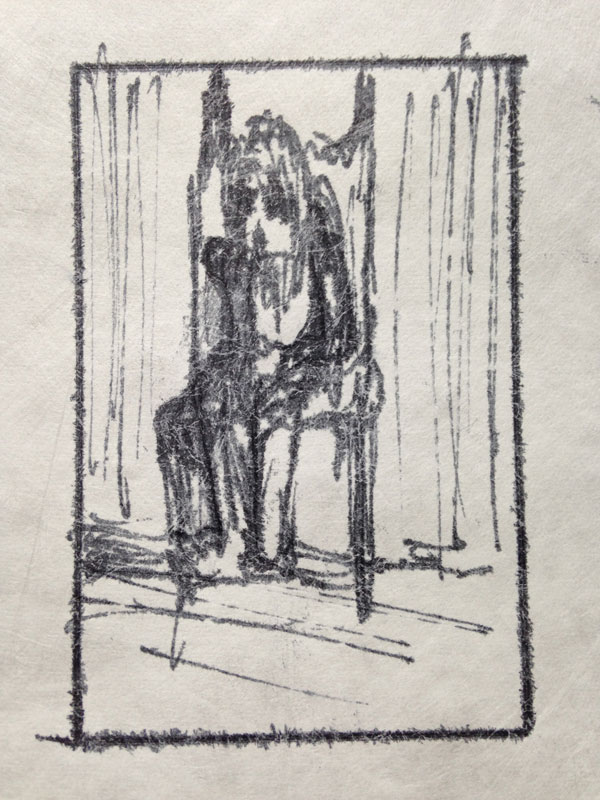
Strange fellow, strange pose ~
 1001 NIGHTS